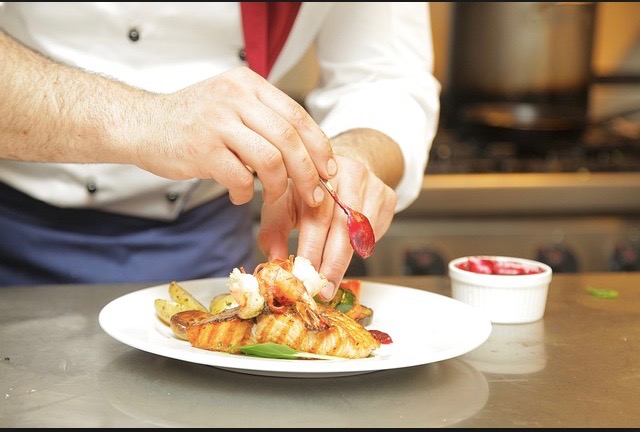
Are you hungry? Hungry by stomach or eyes? The fact that people are increasingly becoming conscious about their food doesn’t find any reason at the size of one’s stomach or mouth. It is the visual hunger that increases their concern about the appearance of food (virtual food) one should consume. To deliberate it more clearly, one’s appetite is fulfilled even before the food-plate reach at the table, in fact one’s appetite is pre-fulfilled at the visualization of food-plate. Today, people are more concern about the way food is decorated in their plate than giving importance on the kind of food they need to consume. Everyday, it feels as though we are being exposed to ever more appetizing images of food, what some called ‘gastroporn’ or ‘food porn’. This is a term defined as ‘the representation of food in a highly sensual manner’, introduced by Alexander Cockburn in 1977 to emphasize the visual appearance of food. People are currently living in a world watching more cookery shows on TV than before. These shows often glamorize food without necessarily telling a balanced story when it comes to the societal, health, and environmental consequences of excess consumption (Brain and Cognition, 2016, p.53-63).
 Now, let me tell you the origin of this ‘visual hunger’ which is about a natural desire, or urge, to look at food, is completely about an evolutionary adaption. This means that since birth, brains of human beings learnt to enjoy seeing food even before its consumption. Do people have any idea about the closeness of mouth and brain? In order to feed one’s hungry stomach, they need to feed first the hungry brain. Yes, you hear that right. The fact that the brain and the mouth are both at the same end of the body may not be as trivial as it seems. In simplest way, the brain pre-determines which nutritious foods to accept and which potentially harmful foodstuffs to avoid or reject, and in doing so, the mouth may ultimately have played an important role in guiding cortical development.
This virtual food or visual hunger is further extended to the shape of digital satiation in this digital world where as of March, 2012 the average number of “friends” per adolescent Facebook user is 834. And this excite these users to express their hunger out in the social sites now-a-days. I am talking about the shares of food-click in WhatsApp, facebook, instagram and what not, where the users even before the consumption of food would click a fine shot and share to get the likes. Their hunger at stomach is fed up by the number of likes and love emojis they get. More the number of likes, more their hungry stomach is fed up. This is a new trending that even becomes a competition among the restaurants to serve the most embellished foods than the nutritious one. It even went to such an extent that some chefs are considering whether to limit, or even, on occasion, to ban their customers from taking photographs of the dishes when they emerge from the kitchen. Some chefs have even embraced this trend by providing dinners with camera stands at their restaurant tables, even serving food on plates that spin 360 degree, thus allowing their customers to get the perfect shot every time.
 |
| Credit: Indowave’s Blog. |
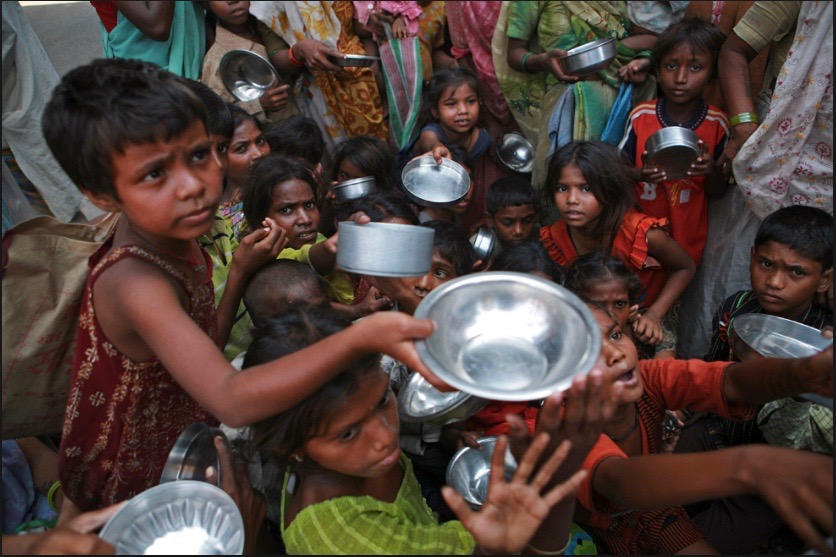
The digital revolution has given a new definition to hunger today. At the time, when thousand of hungry children are hankering for food on the streets of India, we have evolved ourselves into most complex form of beings who are serving food on internet, much to the convenient of our eyes than the stomach. This is the digital revolution and a new era of digital India, we have entered into.
 Telling The Hate Tale
Leave a comment